Blog

Admin
September 17, 2026
There are special challenges associated with remote construction projects in the UAE, including long distances, a hot desert climate, and restricted access to skilled workers and utilities on-site. This is where Container Conversion in Dubai comes in handy. Transforming everyday shipping containers into fully functional site offices, accommodation units, or storage units allows contractors to deploy ready-to-use structures faster and at a lower cost than traditional construction methods. With Container Solutions, these converted spaces can be tailored to meet the practical demands of different project sites. As modular construction in the UAE continues to develop, converted containers remain one of the most practical solutions for projects located away from established urban infrastructure
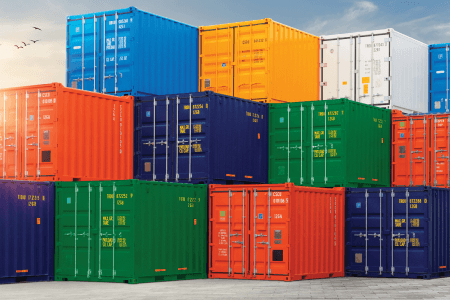
Shipping containers are designed to be rough and heavy-handled and to withstand the elements, so perfectly suited for a remote job site. The shipping container conversion Dubai project makes use of containers that are already structurally reinforced, stackable, and able to be transported easily by truck or crane. Teams can install a unit within hours of arrival, rather than pouring foundations and building walls from scratch.
It promotes sustainable building solutions by reusing existing steel structures, as it avoids the use of new raw materials. Modular buildings in containers are an effective solution between using permanent buildings and temporary tents or cabins for remote projects where speed and durability are more important than architectural style.
Before permanent construction can be completed, remote construction projects (such as oil and gas facilities, desert construction projects, or off-grid renewable energy projects) often need functional space in the UAE. It's container conversion that completes that picture. Units can be manufactured with insulation, electrical wiring, plumbing, and air conditioning, and shipped as a complete package.
The heavy fabrication work is done off-site, which means that remote teams aren't burdened with the logistical challenges of obtaining materials and skilled trades in remote locations. This off-site construction UAE model can save a lot of time on-site and can help to start operations earlier without compromising workers' safety and comfort.
Converted containers can be very versatile. Depending on project needs, the same base unit can become several different types of modular container structures.
Although container building solutions in Dubai have numerous benefits, remote deployment comes with its own set of challenges.
Early planning is the key to overcoming these challenges. The right container size for the transport route, pre-installing a utility system at the factory, and having a team of experienced logistics personnel can decrease delays. Reinforced insulation and reflective coatings protect units from the heat of the desert, and modular design enables units to be added or taken apart, depending on changing requirements at the site. By working with a provider with experience in commercial container conversions, each container will be tested for durability before it is even taken out of the factory.
It normally starts with the selection of containers, a structural inspection, then cutting and welding, insulation, and fit-out of the interior at a controlled facility. After a quality check, units are loaded for transport and delivered directly to the remote site. Upon arrival, teams set up the space, hook up utilities, and conduct final inspections, thus enabling the space to be up and running in a short time compared to the traditional timeline of building construction.
Conventional construction in non-metropolitan locations involves moving raw materials, the use of more workers, and the reliance on weather conditions to dictate construction timelines. In a reversed model, the load is moved in the factory, and only a tested and finished product is sent to the site to be container converted. Typically, this leads to faster deployments, lower costs, and lower reliance on the local infrastructure, which is a good alternative anywhere speed and are most important.
Good planning begins with the fact of the site access, terrain, and availability of utilities. With the exception of utilities that can be connected on site, the project teams should identify transport routes prior to arrival, verify container dimensions with roadway and site clearances, and determine which utilities can be pre-installed. By involving a conversion specialist at the beginning of the process, the design of the unit can be adjusted to take into account the particular remote environment to which the unit is to be exposed, including insulation, ventilation, and finishing.
Dubai is the ideal location to serve remote projects throughout the UAE, given its status as a regional center for fabrication and logistics. Local container conversion experts have knowledge and experience in the desert environment and can engineer containers that can resist the heat while adhering to international building and safety codes. This means that for any remote modular construction plan, it is trustworthy to start with Container Conversion in Dubai.
Fast, durable, and adaptable, converted shipping containers are the answer to the demand of remote construction sites across the UAE. Whether for site offices, worker accommodation, storage, or workshops, the use of container-based modular buildings helps project teams get up and running quickly, even where infrastructure is not established. Issues such as transport, terrain, and access to utilities are present in remote projects, but can be overcome by careful planning and the right conversion partner. With Container Solutions, businesses can access practical and adaptable container conversion options designed to meet the demands of challenging project locations. As demand for modular construction in the UAE steadily increases, Container Conversion in Dubai is proving to be an effective and efficient solution for delivering practical, sustainable, and cost-effective spaces, even to the most distant corners of the nation.
Depending on complexity, most conversions take a few weeks from design approval to completion, before transport and installation.
Yes, with proper insulation, reflective coatings, and ventilation, containers are commonly adapted for long-term use in high-temperature environments.
Both. Depending on design and finishing, converted containers can serve as temporary site facilities or semi-permanent structures.
20ft and 40ft containers are the most common, chosen based on transport feasibility and site space requirements.
Most units need a level, stable base rather than a full foundation, though ground conditions on remote sites should always be assessed first.

16.10.2026

13.10.2026

17.09.2026

14.09.2026

21.08.2026